Budget vs Premium Tires: Where Does Your Money Go?
August 16, 2026 · tire buying guide · budget tires · premium tires
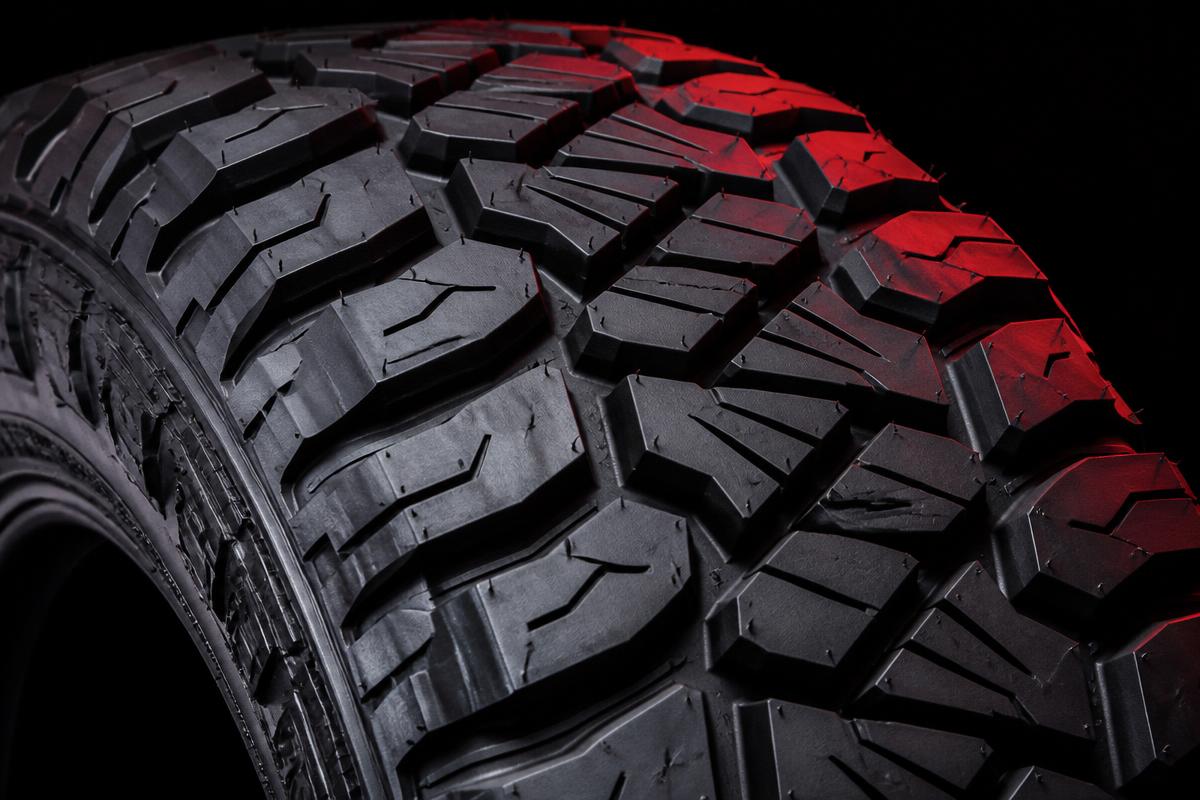
A customer came in yesterday driving an F-150, looked at the line-item quote for a set of tier-one highway tires, and asked me straight up: "Am I paying ninety bucks extra per tire just for the fancy TV commercials?"
It is a fair question. When you are looking at an invoice that sits north of a thousand dollars for four circles of rubber, you ought to know exactly where your hard-earned money goes. The short answer is no, you aren't just paying for a marketing budget. You are paying for chemistry, carcass construction, and quality control. But the full answer depends on what you drive, where you drive, and what you expect that tire to do when the skies open up over East Texas.
The chemistry under your fenders
A tire looks like a simple black doughnut, but it is actually a chemical compromise. Raw rubber by itself melts in the summer and turns into a hockey puck in the winter. To make it work on a truck, chemical engineers blend natural rubber, synthetic polymers, carbon black, and silica.
Where budget tires save money is right here in the recipe. Cheaper tires rely heavily on standard carbon-black rubber compounds. They work fine on dry pavement at 45 miles an hour. But down here in Tyler, asphalt surface temperatures easily break 140 degrees in July, followed three minutes later by a localized thunderstorm that leaves two inches of standing water on Loop 323.
Premium tires use high-silica synthetic compounds. Silica lets the tread stay pliable on wet pavement without wearing down like a pencil eraser in the heat. In real-world stopping tests from 60 miles per hour on a wet road, a premium tire can pull a midsize SUV to a dead stop 20 to 30 feet shorter than a bottom-tier economy tire. That is the difference between a close call and calling your insurance agent.
Tread depth, weight, and internal steel
You also pay for what is inside the tire that you cannot see. Beneath the tread sits a framework of fabric plies, steel belts, and spiral-wrapped nylon cap plies.
- Starting tread depth: A lot of budget tires come out of the mold at 9/32 or 10/32 of an inch of usable tread. A premium highway tire often starts at 11/32 or 12/32. Since you ought to pull a tire off when it hits 2/32 of an inch (or 3/32 if you care about rain traction), that extra two thirty-seconds gives you thousands of extra miles.
- Internal uniformity: Premium manufacturers hold tighter tolerances on the steel belting inside the carcass. On our spin balancer, a cheap tire might need three or four ounces of lead weight to run smooth right out of the wrapper because the internal density is inconsistent. A high-end tire usually takes an ounce or less. Less lead weight means a smoother ride at highway speeds on Highway 69.
- Treadwear longevity: A basic budget tire might give you 25,000 to 30,000 miles before the compound hardens up and starts humming. A quality tire built with modern anti-aging polymers can easily hit 60,000 to 70,000 miles, provided you keep your inflation pressure right on the door placard spec—usually around 32 to 35 PSI cold—and rotate them every 5,000 miles.
When budget tires actually make sense
Now, I am not here to tell you that every vehicle needs a top-shelf tire. We sell plenty of entry-level tires, and they have their place.
If you have a farm truck that spends nine-tenths of its life puttering down red clay county roads at 25 miles an hour, buying a set of high-tech silica-compound highway tires is a waste of cash. If you are fixing up an older sedan for a teenager to drive three miles back and forth to Tyler Junior College, a reliable mid-tier or entry-level tire will get the job done safely without draining your savings account.
But if you are putting miles on the highway, hauling a travel trailer, or carrying your family through East Texas spring storms, paying for higher-grade engineering pays you back in safety, tread life, and fuel economy.
If you are trying to figure out where the sweet spot lies for your truck, car, or crossover, drop by the counter at Tire Barn Plus. We will look at your tread, check your driver's door jamb specs, and give you an honest breakdown. Or, if you are sitting at home researching on your phone, ask Axle right here on our website—he knows our inventory specs inside and out.